
Celebrating Canadian Character – Courage, Coaching, and Compassion at the Edmonton Food Bank

2026 Blog Series | Canadian Character
Across Canada, there is an extraordinary amount of good, decent, and meaningful work happening every day. Over the years, I’ve had the privilege of travelling our country and observing workplaces of all kinds—working alongside leaders at every organizational level. Again and again, I’ve seen Canadian character come to life through quiet courage, steady commitment, and compassion in action.
This story is one of those examples.
To write this blog, I had the pleasure of interviewing Marjorie Bencz, Executive Director of the Edmonton Food Bank, and Yagut Alberts, Administrative and Pantry Lead.
An Anchor in the Community
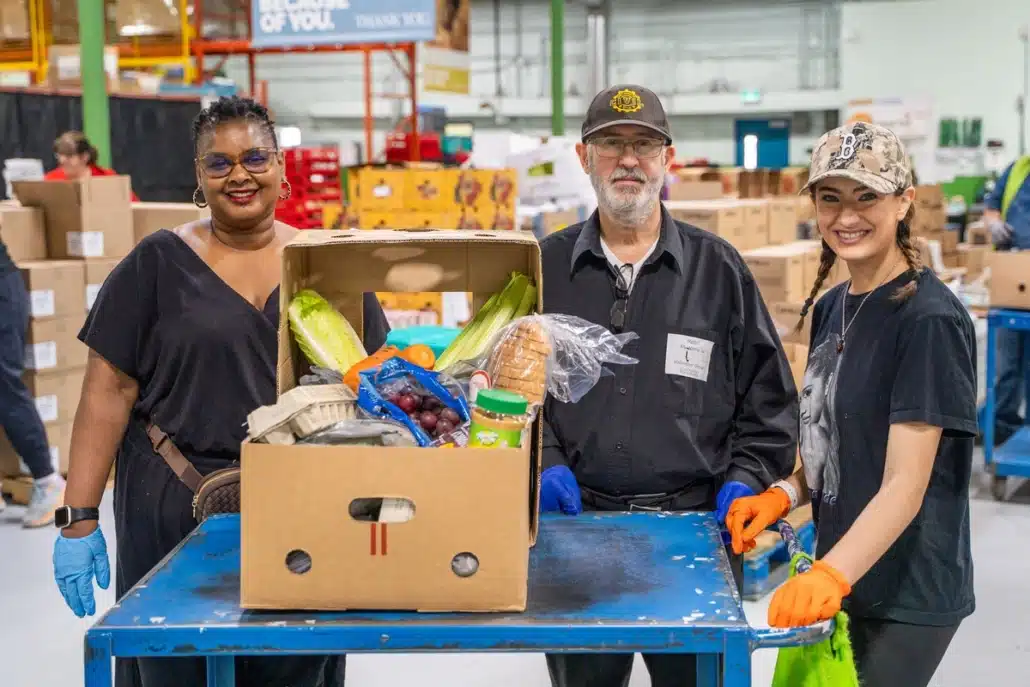
In every thriving city, there are organizations that quietly hold the community together—places where compassion meets action. Established in 1981, the Edmonton Food Bank has been a lifeline for individuals and families facing food insecurity for more than four decades. Today, it stands as both a vital support system and a catalyst for community resilience.
The scope of their work is remarkable:
- Three warehouses and a call centre
- Programs including hamper distribution, pantry services, and community kitchens
- Beyond Food Job Readiness Program helps job seekers with résumé development and other services
- Food hampers to more than 40,000 people each month
- A dedicated team of 84 staff members and over 3,000 volunteers
- Partnerships with 380 schools, shelters, soup kitchens, and community organizations
- Approximately 400 calls and emails handled daily for food assistance
These numbers tell a powerful story—but they only begin to capture the heart of the organization.
Serving a Diverse and Growing Community
Edmonton presents unique food production challenges as a gateway to the North. Root vegetables are abundant, while access to other fresh produce can be more limited—requiring creativity, partnerships, and innovation in food sourcing and distribution.
The Food Bank also serves a deeply diverse community. Clients come from across Canada and around the world, including people from Ukraine, Africa, Iran, Syria, Somalia, Iraq, South & Central America, China, Afghanistan, Gaza and Azerbaijan. This diversity shapes how services are delivered—with care, respect, and cultural awareness at the forefront.
Mission, Vision, and Values
At the heart of the Edmonton Food Bank is a clear and powerful mission:
To ensure that all Edmontonians have access to nutritious food in a dignified and supportive environment.
This mission is more than a statement—it is a promise. A promise that no one should have to choose between paying rent and putting food on the table. A promise that hunger is not an individual failure, but a community challenge we can solve together.
Vision: A Hunger‑Free Edmonton

Looking beyond immediate needs, the Food Bank envisions a future where hunger does not exist—where everyone has the resources, support, and opportunity to thrive. This vision drives long‑term strategy, partnerships, and advocacy focused on addressing the root causes of food insecurity.
Values in Action
Their work is guided by five core values:
- Compassion – Treating every person with dignity and empathy
- Collaboration – Working together with donors, volunteers, and community partners
- Stewardship – Using resources responsibly and transparently
- Innovation – Continuously improving programs and approaches
- Inclusivity – Ensuring services are welcoming and accessible to all
These values shape not only what the Food Bank does—but how it does it, every single day.
Leadership That Sets the Tone
When asked about workplace culture, Yagut Alberts described an environment rooted in safety, well‑being, and respect—for employees, volunteers, and clients alike. She shared that this culture is driven by leadership, describing Marjorie Bencz as the organization’s beacon.
According to Yagut, Marjorie consistently demonstrates patience, deep listening, kindness, and a commitment to continuous development—qualities that ripple throughout the organization.
Coaching for Independence and Confidence
Food insecurity affects people from all walks of life—students, seniors, newcomers, working families, and those facing unexpected hardship. At the Edmonton Food Bank, support goes beyond food.

Yagut often coaches clients toward independence by helping them access resources, build skills, and grow confidence. She also shares insights into how Canadian workplaces function, helping clients prepare for employment and successful integration into the workforce.
Of course, as a workplace coach, I couldn’t resist exploring that statement in detail. My question, “how do you describe the Canadian workplace?”
Yagut’s description.
- Work from the heart—be engaged in what you do
- Be honest
- Be kind to everyone
- Don’t judge others
- When you make a mistake, don’t hide it—tell your supervisor
- Say you are sorry
- Care about others and help where you can
- Keep developing yourself—learn something new every day
That is a description we can all be proud of.
A Powerful Example of Canadian Character
The Edmonton Food Bank is doing tremendous work. Through wise leadership, clearly articulated values, and a strong coaching culture, the organization is helping an important city thrive.
This is Canadian character in action—courage rooted in compassion, leadership grounded in values, and a commitment to helping others develop the skills and confidence to thrive on their own.
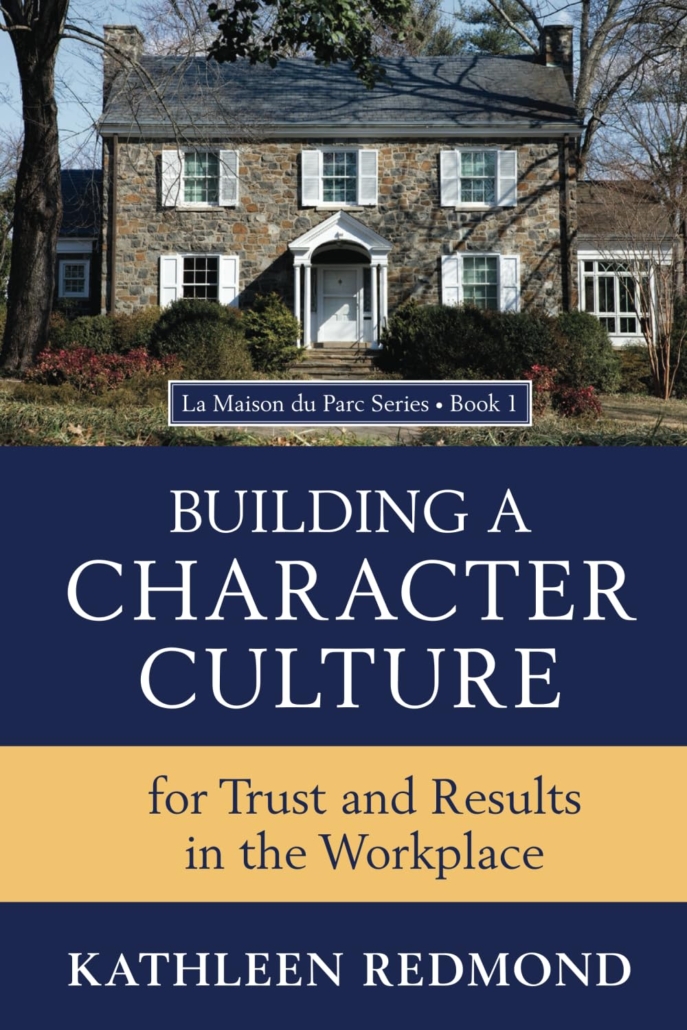
Building a Character Culture lays an integral foundation for creating trust and result in the workplace through real life/business scenarios which play out at La Maison du Parc.
Kathleen’s teachings are further substantiated with well researched facts and hands-on tools and examples that all who follow her work can benefit from tremendously.
If you are interested in reading more about food sharing – here is a resource provided by Marjorie Bencz
Sharing the Harvest by Elizabeth Henderson (with Robyn Van En) is a practical and philosophical guide to Community Supported Agriculture (CSA) that combines case studies, how‑to advice, and advocacy for local, ecological food systems. The book explains CSA’s origins, structures, and impacts on farms and communities.
Key messages from the book.
- CSA is a partnership that shares risk and reward.
Members pay up front to finance the season; in return they receive a share of the harvest. This model shifts financial risk from farmers to a shared community responsibility and stabilizes farm cash flow. - Local food reconnects people to place and season.
Henderson emphasizes that CSA rebuilds relationships between consumers and the land, teaching members to eat seasonally and appreciate the realities of farming. - CSA strengthens local economies and keeps farms viable.
By keeping money in the community and creating reliable markets, CSAs help preserve farmland, create jobs, and resist the pressures of industrialized, globalized food systems. - Ecological and humane farming practices are central.
The book links CSA to organic and sustainable practices, arguing that community investment enables farmers to prioritize soil health, biodiversity, and long‑term stewardship over short‑term yields. - CSA is adaptable and diverse in form.
Through numerous profiles and examples, Henderson shows that CSAs can be small or large, urban or rural, farm‑based or cooperative, and that communities can tailor the model to local needs. Archive agroinnovations.com - Practical guidance matters as much as ideals.
The book offers concrete advice on organizing shares, pricing, member communication, distribution logistics, and conflict resolution—making it both an inspiration and a manual for practitioners.
What this means for readers
- For consumers: CSA offers fresher food, a clearer connection to how food is grown, and a way to support local economies and ecological farming.
- For farmers and organizers: The book provides templates, cautionary lessons, and real‑world examples to help launch or improve a CSA while managing labor, finances, and member expectations.
Leave a Reply
Want to join the discussion?Feel free to contribute!